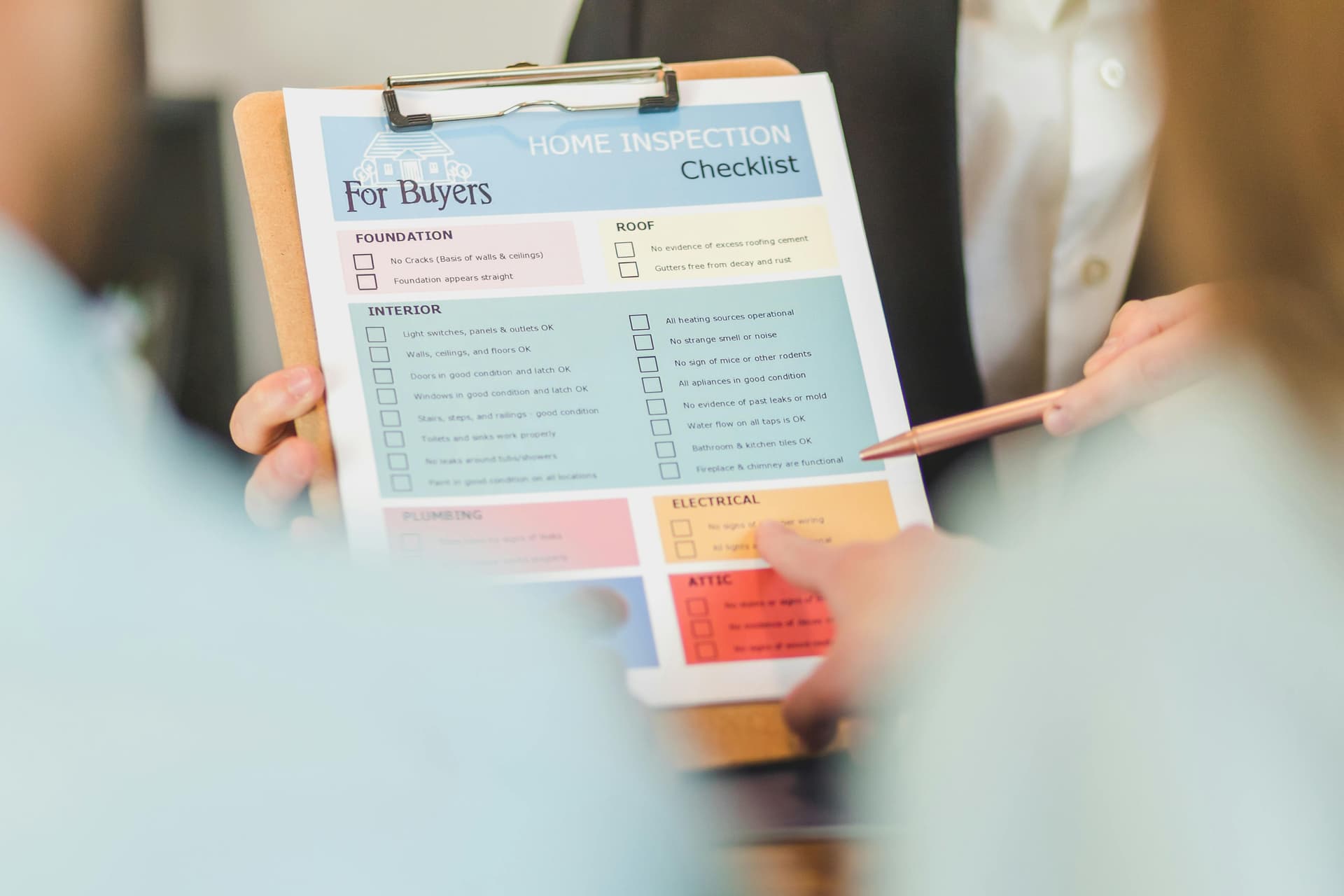
A rental property can look solid simply because the listing package highlights the right numbers and pushes the ugly ones into the future. That is exactly why you need to know how to read the warning signs before buying rental property. The goal is not to reject every older plex on the market. The goal is to decide whether the problem can be fixed through price, structure, or reserves, or whether it cuts straight into the acquisition thesis.
Despite what many listing packages suggest, you should not judge a rental file on the displayed yield alone. You have to judge the whole operation: the building's true condition, the opinion of a competent inspector, the quality of the location, the closing costs that get ignored, the strength of the financing structure, and the credibility of the appreciation thesis. The twelve warning signs below are the ones that most often derail a file that looked well built on paper.
If you want to refresh the math before screening a file, go back to how to calculate rental yield. And if you want a broader verification sequence before you write an offer, keep the Quebec rental property investment checklist close by.
Part 1 - Rent that tells a story
1. The price already assumes you will raise rent quickly
Below-market rent is not always a problem. Sometimes it is the real opportunity. The warning sign appears when the seller already values the building as if the catch-up has happened, even though the current leases, tenant turnover pace, and neighborhood reality do not support that scenario.
On a Quebec plex, the confusion arrives fast: "potential" rent gets treated as if it were almost guaranteed, when in practice you may need to wait for a turnover, complete repairs, or simply accept a much longer timeline than expected. Quebec's Tribunal administratif du logement (TAL) heavily regulates how fast rent can move during a lease term. Quebec investors bring this up constantly for a reason, and it changes the math dramatically for buyers coming from other provinces.
2. Vacancy is modeled as if it does not exist
Many seller packages assume units will re-lease by themselves, with no downtime, no turnover work, and no leasing friction. On a triplex, one vacant unit for two or three months is enough to push the full-year cash flow negative. You need to plan for that, not hope it away.
The right question is not "Is the unit rented today?" The right question is "What happened on the last two turnovers, how many rent days were actually lost, and what did the make-ready and leasing process really cost?"
3. The file only works because of side income
Parking, storage, laundry, utility recoveries, coin laundry: all of that income can be real. But if it is helping justify the asking price, you need to confirm that it is stable, documented, and actually collected, not just typed into a spreadsheet.
The more a building needs small side lines to look strong, the more you should ask whether the core rent really stands on its own.
The high-value check: review the TAL record for the address
One signal most buyers never think to verify, even though it is incredibly valuable, is the record at Quebec's Tribunal administratif du logement (TAL). By entering the exact property address in the TAL online lookup tool, you can review the history of files opened for that address: non-payment, rent-setting applications, loss-of-enjoyment claims, work disputes, collections, and lease termination matters.
Why this check matters so much:
- You inherit the tenants, not just the walls. A tenant who was already in conflict with the previous owner will very likely be in conflict with you. That is not a personality issue. It is an established dynamic.
- A heavy history usually means painful management ahead. If every rent increase had to go through TAL, expect the tribunal to be the real operator of the file, not you. Once TAL is involved in every adjustment, timelines stretch, costs rise, and theoretical profitability becomes fiction.
- Eviction timelines in Quebec are long. It can easily take 6 to 18 months between the first missed payment and effective recovery of the unit. If the property already has several active or recent non-payment files, the true economic performance is nowhere near what the listing package shows.
- Hidden vacancy exists. A unit may be technically occupied by a tenant who has not paid in four months, but economically that is worse than a vacant unit because time is working against you.
A few isolated files over twenty years of operations are not a warning sign by themselves. But an address that appears repeatedly on the TAL roll is an address telling you either the tenant base is difficult or the owner managed leases badly. In both cases, that burden transfers to you at signing.
The lookup is available online for a few dollars per file. It is probably the highest-return five minutes of due diligence in the entire acquisition process.
Part 2 - Building condition: what an inspector will actually find
4. No professional inspection, or a rushed one
Inspecting a plex with a qualified building inspector is not a luxury. It is the expense with the best cost-to-protection ratio in the whole file. Expect roughly $700 to $1,200 for a duplex or triplex, and up to $900 to $1,500 for a fiveplex. That spend can save you tens of thousands of dollars in surprises.
The warning sign appears when:
- the seller discourages or limits inspection access
- the inspection covers only one unit without seeing the other suites
- the inspector does not go on the roof, into the basement, or open the electrical panel
- the report stays verbal instead of producing a written file with photos
A serious inspection report is not a pass/fail verdict. It is a list of quantifiable risks you can push back into the negotiation or into your repair budget.
5. Major systems are near end of life and still sit outside the structure
An asphalt shingle roof usually lasts 15 to 25 years. A hot water tank lasts 10 to 12 years. A gas water heater lasts around 10 years. A fuse panel was probably installed before 1970 and likely needs replacement. Unmaintained wood windows, galvanized plumbing, and an oil furnace moving toward environmental obsolescence all carry a probable future cost, not a hypothetical one.
The useful test is to list the five most likely material risks over the next 24 months and assign each of them a real cost range. If the file no longer works after that exercise, the building was already weaker than it looked.
6. Quebec-specific issues are poorly documented: pyrite, vermiculite, iron ochre, asbestos
These four items deserve their own section because they are highly specific to Quebec and they can turn an otherwise ordinary file into a financial sinkhole:
Pyrite expands in the presence of humidity and oxygen. It can lift slabs and crack foundations. The test, often referred to as IPPG, costs around $500. A positive result can make the property hard to insure and nearly impossible to finance. It is common in parts of Montreal's South Shore.
Vermiculite is an insulation product used before 1990 that may contain asbestos. Remediation can cost $15,000 to $40,000 depending on the area involved. It is not an automatic deal-breaker, but it is a powerful negotiation lever if identified before the promise to purchase.
Iron ochre is a bacterial deposit that clogs French drains. Typical clues are a sulphur smell in the basement and recurring water infiltration. The fix is a specialized drainage system and often lands in the $20,000 to $40,000 range.
Asbestos still shows up in many Montreal plexes built before 1985, including pipe insulation, flooring layers, and textured plaster. Testing costs a few hundred dollars per sample.
If the listing package says "century home," "original charm," or "period building" without mentioning any of these tests, treat the file as incomplete until proven otherwise.
Part 3 - Location: a neighborhood that pulls or drags
7. Low Walk Score and weak connectivity
The rental performance of a plex does not depend only on price or asking rent. It depends on the neighborhood's ability to attract and retain solvent tenants year after year. Walk Score and transit access are simple but powerful indicators: Montreal as a whole sits around 70, Plateau-Mont-Royal is around 93, while Quebec City is closer to 49. The higher the score, the more stable tenant demand tends to be, the shorter vacancy usually is, and the more appreciation tends to follow.
A property whose address forces tenants to rely on a car for groceries, work, and services, and that sits more than a 15-minute walk from a metro station or rapid bus line, does not have the same rental dynamic as a well-connected plex. That is not always fatal, but it should be reflected in the price, not ignored in favor of hope.
8. The micro-neighborhood does not support rental demand
Beyond Walk Score, look at the immediate context:
- a very busy or noisy street, such as a major traffic corridor or heavily used bike route
- no practical street parking and a permit setup that is hard to secure
- awkward unit orientation, such as semi-basement suites or dark apartments with little natural light
- immediate surroundings that are industrial, declining retail, or anchored by large vacant commercial space
- neighborhood demographics that point to aging, younger household outflow, or school closures
None of that will appear in a broker package. You see it by walking the neighborhood on foot at 5 p.m. on a weekday and again at 11 a.m. on a Sunday. Two visits are often enough to understand whether an area is really rising or not. Municipal demographic data and densification plans complete the picture.
Part 4 - Expenses and financing
9. Operating expenses are too good to be true
Fragile files often look attractive because the expense line has been flattened. Municipal and school taxes, insurance, routine maintenance, vacancy, management, bad debt, and replacement reserves always come back into the real model eventually.
A useful field benchmark: on a well-kept Quebec plex, operating expenses usually land around 35% to 45% of gross income, not 15% to 20%. If you need a reference point before accepting a flattering yield, revisit what is a good rental yield in Canada. It is often the fastest way to tell whether the displayed performance comes from a real asset or from an overly optimistic budget.
10. The financing only works under one exact scenario
When a property only works with an ideal interest rate, a long amortization, and a maximum loan ratio, that is not a robust file. It is an ultra-sensitive one. A small rate move, a larger down payment required by the lender, or a slower re-lease is enough to wipe out the margin.
Before you call the file "almost good," you need to decide whether the problem really comes from the building or mostly from a structure that is too tight. Helpful reminder: with the minimum 20% down payment on a non-owner-occupied income property, many lenders also expect a Debt Service Coverage Ratio (DSCR) around 1.1 to 1.2. A file that barely passes on today's DSCR may fail at renewal if rates move up.
Part 5 - Real cash and hidden closing costs
11. Welcome tax, legal fees, inspection, appraisal: the costs the seller forgets to mention
The down payment is not the full cheque. On a Quebec acquisition, you need to add several items that are rarely built into broker simulations:
| Item | Typical range on a $600,000 property |
|---|---|
| Welcome tax (land transfer tax) | $7,500 to $9,000 |
| Legal fees | $1,800 to $2,500 |
| Pre-purchase inspection | $700 to $1,500 |
| Bank appraisal | $400 to $800 |
| Specialized testing (pyrite, vermiculite, asbestos) | $0 to $3,000 |
| Closing adjustments (taxes, rent) | $1,500 to $4,000 |
| Startup reserve (2 to 3 months of expenses) | $3,000 to $6,000 |
| Total beyond the down payment | $15,000 to $25,000 |
If you want to verify the right order of magnitude for welcome tax in your municipality, use the welcome tax calculator. The gap between Montreal and an outer suburb is not trivial on a six-figure property.
A property that looks profitable only because closing cash is minimized is not just badly budgeted. It may be undercapitalized from month one, which is one of the fastest ways to turn a good file into a bad ownership experience.
Part 6 - Documentation, appreciation, and the acquisition thesis
12. The price rests on appreciation, but the appreciation thesis is undocumented
This is often the signal that connects all the others, and it is the most dangerous one because Montreal culture tends to normalize it. Many plexes trade today with near-zero or negative cash flow on the implicit promise of continued appreciation. That bet is not irrational. Quebec plexes really have appreciated a lot over the past twenty years. But it is no longer automatic.
Weak cash flow in a rising, well-connected, densifying neighborhood with a high Walk Score can still be defensible. Weak cash flow in a stagnant area with a poor Walk Score, eroding demographics, and no meaningful projects nearby is paying a high price for a negative yield without a safety net.
The warning sign takes several forms:
- the rent roll does not match the signed leases or renewal dates
- the building condition is described with words like "well maintained" or "immaculate" but not documented through system ages or repair invoices
- the asking price assumes higher rent, lower expenses, delayed repairs, and perfect execution all at the same time
- no appreciation thesis is justified by anything more than "it's Montreal"
Potential has value, but it should not be billed as if execution risk had already disappeared.
Worked example: a Montreal triplex can change character very fast
Take a triplex listed at $845,000. The seller presents a file that looks reasonable:
| Reading of the file | Annual gross rent | Operating expenses | NOI | What it suggests |
|---|---|---|---|---|
| Seller version | $58,800 | $16,200 | $42,600 | File that appears to absorb debt without trouble |
| Operator version | $56,400 | $28,100 | $28,300 | Much tighter file, highly sensitive to price and leverage |
How does the gap get so large?
- a vacant unit is modeled at target rent instead of the rent you can actually defend
- the expense line carries neither a serious reserve nor turnover cost between tenants
- insurance and maintenance are understated
- part of the upcoming work is pushed outside first-year cash needs
- the inspection reveals an electrical panel upgrade ($6,000) and a roof near end of life ($12,000 expected within 24 months)
- welcome tax, appraisal, and legal fees add roughly $16,000 to the real cash needed at closing
The file is not necessarily dead. But it is no longer telling the same story. At that stage, the real question is no longer "Is the property interesting?" It is "At what price, with what structure, and in what neighborhood does this deal become defensible again?"
Before the promise to purchase: the right control sequence
Not every warning sign deserves the same response. Some can be corrected through price. Others need to be absorbed in the reserve, the down payment, or the repair budget. Others simply tell you the acquisition thesis is wrong even if the building itself still looks attractive.
Before you go any further, do at least this:
- walk the neighborhood at two different times and check the Walk Score and transit access
- rebuild rent from existing leases and recently re-leased comparables, not just from asking rent
- restate expenses at a long-term owner-operator level, roughly 35% to 45% of gross income
- have the building inspected by a professional who sees every unit, the roof, the foundation, the electrical, and the plumbing
- review prior claims history, potential environmental issues such as pyrite, vermiculite, asbestos, or iron ochre, and order tests when the context calls for them
- price the likely work over the next 12 to 24 months with a real cost range
- add every closing cost and the startup reserve to the total cash you need to lock in, roughly $15,000 to $25,000 on a typical file
- compare a real case and a prudent case in the rental investment simulator
- test debt sensitivity in the mortgage calculator before deciding the file is almost good
If the property still holds after that, the risk may be real but acceptable. If everything collapses as soon as you remove the flattering assumptions, the problem is no longer tactical. The acquisition thesis itself needs to be reconsidered.
If you want a fuller verification framework before submitting an offer, go back to the Quebec rental property investment checklist. And if you want to recalibrate the file against a broader return benchmark, revisit what is a good rental yield in Canada before deciding the asking price is defensible.
The best buyer is not the one who never sees warning signs. It is the one who forces the file to survive honest assumptions on rent, expenses, building condition, location, real cash, and appreciation before letting enthusiasm take over.
FAQ
Recommended tool
Turn the article into a live scenario
Use our calculators to turn the concepts from the article into a practical estimate.